




MUSCAT: The United Nations Industrial Development Organization (UNIDO) has identified Oman as one of the Middle East's most promising emerging industrial economies, highlighting Oman's efforts to leverage its clean energy transition to build a globally competitive manufacturing base centred on photovoltaic (PV) technologies rather than remaining solely a consumer of renewable energy equipment.
In its newly released Asia-Pacific Industrial Development Report 2026, UNIDO cites Oman as a case study of how targeted industrial policy, foreign investment and strategic resource development can create new manufacturing capabilities in clean energy industries. The report positions Oman's photovoltaic manufacturing ambitions as an example of the broader industrial opportunities arising from the global transition to low-carbon energy systems.
According to UNIDO, Oman has "successfully initiated its entry into the photovoltaic (PV) industry through a combination of public procurement and foreign direct investment (FDI)." Although the country started with only a limited manufacturing base, the report says the sector is expanding rapidly as Oman seeks to establish itself as a regional manufacturing hub for solar technologies rather than merely importing finished products.
The organisation points to the scale of the country's renewable energy ambitions as a key driver of industrial development. By the end of 2024, Oman had already installed around 1.7 GW of operational solar capacity, while another 39.5 GW of projects had been announced, representing approximately $49 billion in clean energy investments.
UNIDO argues that such large-scale domestic deployment creates an important foundation for local manufacturing by generating sustained demand for solar equipment and related components.
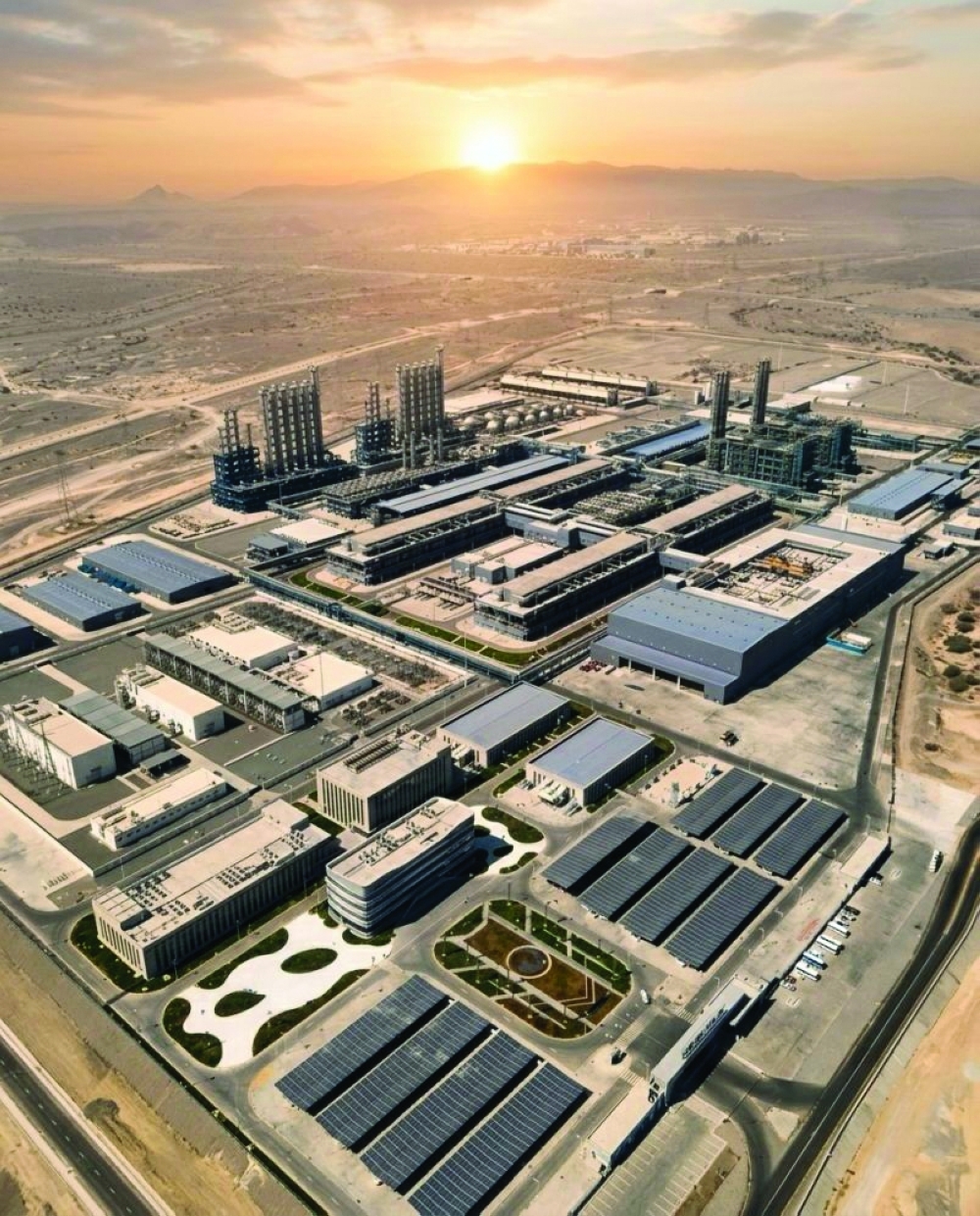
A flagship example highlighted in the report is the United Solar Polysilicon project in Suhar Freezone, which aims to establish a major polysilicon manufacturing facility with annual production capacity of 100,000 tonnes, employing advanced TOPCon (Tunnel Oxide Passivated Contact) cell technology. UNIDO regards the project as a significant step towards creating an integrated solar manufacturing ecosystem capable of supplying both domestic and regional markets.
Beyond project investments, UNIDO identifies several structural advantages that strengthen Oman's long-term manufacturing prospects. Chief among these is the country's substantial reserves of high-quality silica, an essential raw material for solar panel production. The report notes that the Mahout Silica Sand Project is expected to produce 100,000 tonnes annually of 98 per cent pure silica to supply local and regional PV manufacturers, creating opportunities for domestic value addition across the solar supply chain.
Oman's abundant solar and wind resources also provide manufacturers with access to competitively priced renewable electricity, an increasingly important factor as energy-intensive industries seek to reduce production costs and carbon emissions.
Complementing these natural advantages are plans for wind turbine manufacturing, wind farms in Dhofar and Duqm, world-class port infrastructure and planned connections to the GCC railway network, all of which enhance the country's logistics competitiveness.
UNIDO attributes much of this progress to deliberate government policy. The report credits the Manufacturing for Well-being Strategy 2040, reinforced by Oman Vision 2040, with placing industrial diversification at the centre of national economic planning.
These strategies prioritise solar power production as a pathway towards carbon neutrality while encouraging higher-value manufacturing through incentives including tax holidays, 100 per cent foreign ownership and zero import and re-export tariffs within special economic zones such as Suhar and Duqm. According to UNIDO, these measures have already attracted interest from Chinese photovoltaic manufacturers exploring production relocation opportunities.
Oman Observer is now on the WhatsApp channel. Click here